About
I am an Experimental / Test / Product Development Engineer with biomedical engineering depth, a mechanical engineering technology foundation, and a hands-on approach to building, measuring, troubleshooting, and improving physical systems.
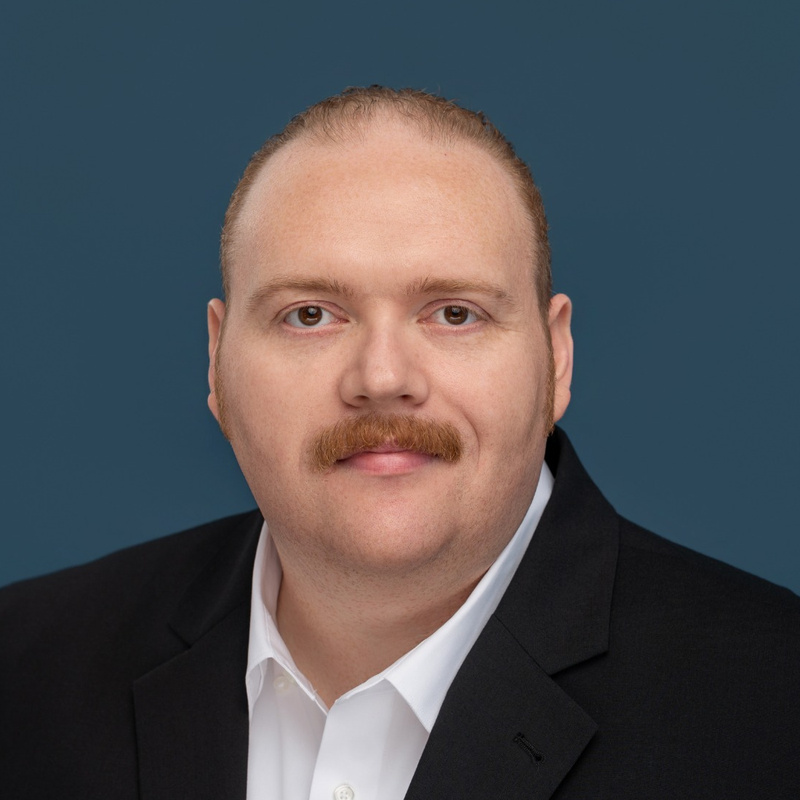
Path into engineering
In 2016, during my senior year at Indiana University Southeast studying InformaticsThe practical use of computing, data, and information systems to solve real-world problems., my father died after my family had spent many years helping care for him. His health problems included an amputation and the use of a prosthetic leg. His death changed the direction of my life and strengthened my desire to work on problems that could improve people's lives.
Rather than finish the degree I was close to completing, I restarted my undergraduate path at Purdue University. I spent roughly four more years earning a B.S. in Mechanical Engineering Technology, building a foundation in mechanical design, manufacturing, experimentation, instrumentationSensors, measurement devices, and related equipment used to observe and test a physical system., controls, CADSoftware used to create and modify precise 2D drawings and 3D models of physical parts and systems., prototyping, and testing.
I later continued that path at Carnegie Mellon University, where I earned an M.S. in Biomedical Engineering. My graduate research focused on experimentally developing a temporary liver-support concept for ammonia removal in acute liver failure.
The path was not the shortest route to an engineering career, but it is why my work crosses disciplines so naturally: computing, mechanical systems, experimental research, biomedical engineering, software, and hands-on fabrication all became parts of the same problem-solving practice.
While I was at Purdue Polytechnic New Albany, Professor Andrew McCart interviewed me for a Student Media Spotlight about why I chose Purdue Polytechnic, what I valued about the program, and how I hoped to use my degree to help society.
Engineering background
My work spans experimental apparatus, mechanical design, laboratory research, prototyping, instrumentation, CAD, fabrication, programming, data analysis, and technical documentation.
My strongest work tends to sit where physical systems and measurement meet: define the problem, build or modify the system, instrument it, test it, analyze the results, troubleshoot what fails, document what happened, and iterate.
I am especially interested in hands-on experimental, test, and product development work, along with validationTesting and documented evidence used to show that a product, process, or system meets its intended requirements., metrologyThe science of measurement, including how measurements are made, calibrated, and shown to be reliable., quality, manufacturing support, biomedical R&D, and related technical roles.
Awards & recognition
Selected honors and recognition include:
- National Naval Horizons Essay Contest Recipient — U.S. Department of the Navy, Office of Naval Research, 2021.
- Biomedical Engineering Department Head's Fellowship — Carnegie Mellon University, 2021.
- Biomedical Engineering Scholarship — Carnegie Mellon University, 2021.
- ASME Foundation National Scholarship Recipient — 2018.
- Eagle Scout — Boy Scouts of America, Troop 382, Lexington, Kentucky.
A more complete record of honors, scholarships, and academic recognition is maintained in my CV.
Certifications
Selected engineering and technical credentials include:
- Certified SOLIDWORKS Associate — Mechanical Design (CSWA), Dassault Systèmes, 2016.
- Certified SOLIDWORKS Associate — Electrical (CSWA-E), Dassault Systèmes, 2018.
- MathWorks training certificates in MATLAB, Simulink, machine learning, statistics, linear algebra, differential equations, nonlinear equations, data processing, and visualization, 2022.
Historical and role-specific training can be included in the CV where the date and status of each credential can be shown without implying that expired or time-limited training is current.
Professional profiles
Additional professional, technical, and research context is available through these profiles.
About this site
dibeneditto.com is a hand-built static websiteA website served primarily as prebuilt files rather than generated by a server application for each visitor. using semantic HTML, shared CSS, and small amounts of JavaScript. I keep the architecture deliberately simple: no large web framework, no downloaded web fonts, and no server application required for the main site.
Namecheap is the domain registrar, Cloudflare provides authoritative DNSThe service that provides the official DNS records telling the internet where a domain's services are located. and related network security and DDoSA distributed denial-of-service attack, where many systems flood a service with traffic in an attempt to make it unavailable. protection, and GitHub Pages hosts the site. The site is designed around accessibility, progressive enhancementBuilding the essential content and functionality first, then adding enhanced features when the browser supports them., durable URLs, readable source code, and as few external dependencies as practical.
I do not intentionally use advertising, visitor analytics, tracking services, or tracking cookies. Some browser-based tools use local browser capabilities so settings or working data can remain on the visitor's device rather than requiring a server.
Contact
For professional inquiries, collaboration, or opportunities, see the contact page.